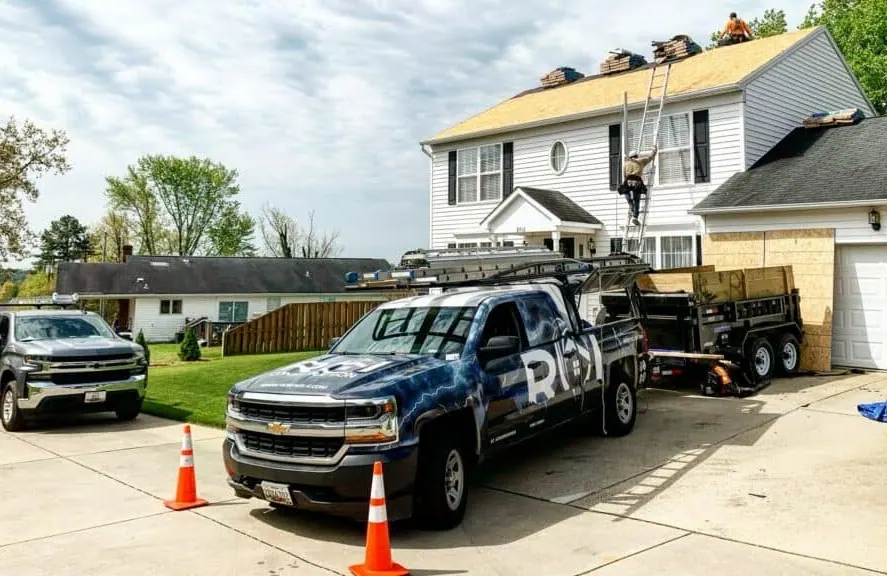
Cliffline Roof Care is a referral service, not a contractor. The same number that handles leak calls also connects people who are planning a replacement, whether that is a pitched shingle roof on a house in Coytesville or a flat roof on a small apartment building near Main Street.
This page explains the signs that a roof is done, which materials fit Fort Lee buildings, how permits and approvals work, how long the job takes, and what to do while you decide. If you are only dealing with a single leak right now, our roof leak repair page is a better place to start.
How do I know it is time for a roof replacement in Fort Lee?
You usually need a replacement when the damage is widespread, the materials are worn out, or repairs keep failing. One bad flashing joint is a repair. A roof that leaks in several places, or leaks again soon after patching, is telling you the whole system is tired.
Age matters, but condition matters more. Fort Lee roofs take a beating from freeze-thaw cycles, summer heat, nor'easters and wind that funnels around the cliff edge and tall buildings. A roof in a sheltered spot may last longer than one exposed to the Hudson River wind.
- Asphalt shingles that are curling, cracking, bald of granules or missing in many spots
- Repeated leaks in different areas, or new ceiling water stains after every storm
- Flat roof membrane that is cracked, blistered, split at seams or soft underfoot
- Ponding water that stays for days after rain, which points to sagging or failed drainage
- Daylight visible in the attic, or a sagging roof deck
- Wet or rotted roof decking (sheathing) found during a repair
- Heavy patching, with roof cement or sealant layered over older patches
Repair or replace: how does a pro decide?
A good roofer looks at three things: how much of the roof is damaged, what is under the surface, and how much life is left. If the damage is limited and the rest of the roof is sound, a repair is often the smarter choice. You can read more about that route on our flat roof repair page.
If wet insulation or deck is spread across a large area, repairing it piece by piece can cost more over time than starting fresh. A pro may use a moisture scan or core samples on a flat roof to find out. Ask for a written roof inspection report with photos so you can see what they see.
A third option on some flat roofs is a roof coating over a sound membrane. This only works if the roof underneath is dry and in decent shape, so it is not a fit for every building.
Dealing with this in Fort Lee right now? Call and get connected with an independent local pro.
Get Help Now: (201) 298-8093Which roofing materials suit Fort Lee homes and buildings?
The right material depends on the roof shape. Fort Lee has two main types: pitched roofs on houses and small buildings, and flat or low-slope roofs on mid-rise and high-rise buildings and many apartment buildings.
Pitched roofs: asphalt and architectural shingles
Asphalt shingles are the most common choice for single-family and two-family homes in areas like Coytesville and the western side of town. Architectural shingles are thicker and layered, so they hold up better in wind and tend to last longer than basic three-tab shingles.
A full replacement usually includes new underlayment, drip edge, flashing and vent pipe boots. In cold-weather areas like ours, ice and water shield along the eaves and valleys helps protect against ice dam leaks. Your roofer may also suggest improving attic ventilation and attic insulation to keep the roof deck cold and even.
Flat and low-slope roofs: TPO, EPDM, modified bitumen and BUR
Flat roofs on Fort Lee buildings are commonly built-up roofing (BUR), modified bitumen, TPO membrane or EPDM rubber roofing. TPO and EPDM are single-ply sheets that are popular for their light weight and clean seams. Modified bitumen and BUR use layers and are often chosen for toughness and foot traffic around rooftop equipment.
Details matter as much as the membrane. Parapet wall flashing, counterflashing, scuppers, roof drains, HVAC curbs and every roof penetration need to be done right. Most flat roof leaks start at these spots, not in the open field of the roof. For new flat systems and coatings, see our flat roof installation page.
Slate, tile or metal on larger homes
Some larger homes, such as those near Englewood Cliffs, have slate, tile or metal roofs. These need a roofer with specific experience, so ask about it directly. Repairing a few pieces is often better than replacing the whole roof.
What does a roof replacement look like step by step?
The steps vary by roof type, but a typical job follows a clear order. Knowing it helps you spot a rushed or sloppy bid.
- Inspection and written estimate, including the condition of the deck and any hidden damage
- Choice of material, warranty options and a schedule
- Permit and any building or board approvals
- Protecting landscaping, windows and the building entrance, and setting up staging or hoisting
- Tear-off of old roofing down to the deck, or an approved overlay where the code allows it
- Repair or replacement of damaged roof decking (sheathing) and wet insulation
- Installation of underlayment or insulation boards, then the new shingles or membrane
- New flashing at walls, chimneys, skylights, vents and curbs, plus drains and edge metal
- Cleanup, magnet sweep for nails, final walk-through and paperwork
How long does roof replacement take in Fort Lee?
A typical house roof takes one to three days once work starts, depending on size, pitch and weather. Small flat roofs on two-family buildings can also go quickly. Larger multi-unit buildings and high-rises can take a week or more.
Lead time matters too. Permits, material orders and the roofer's schedule can add days or weeks before the first day on the roof. Spring and fall are busy, and storm seasons can push dates back.
Rain, high wind and very cold temperatures can pause the work. A careful crew will dry in the roof at the end of each day so a sudden storm does not soak the building.
What permits and approvals does a Fort Lee roof replacement need?
Most full roof replacements need a permit through the Fort Lee Building Department, and the work falls under the NJ Uniform Construction Code. Rules can change with the scope of work, so confirm with the borough before you sign anything. Ask who will pull the permit; it is usually the roofer.
In New Jersey, contractors doing home improvement work must be registered with the state. Ask any provider for their New Jersey Home Improvement Contractor registration number and check it with the NJ Division of Consumer Affairs. Also ask about insurance and any other licenses that apply. We cannot verify these for you, so confirm them directly.
If you live in a condo, co-op or rental building, the condo board or property manager will usually need to approve the work, the contractor and the schedule. Start that conversation early, since board meetings can add time.
What affects the scope and cost of a roof replacement here?
We do not quote prices, and any number you hear should come from a written estimate by the provider. What shapes that estimate is fairly predictable.
- Roof size, pitch and number of layers to remove
- Material choice and warranty length
- Condition of the deck and insulation underneath
- Number of penetrations, curbs, skylights and chimneys
- Access: tight lots, street parking limits, hoisting or crane needs on taller buildings
- Drainage changes, such as adding scuppers, tapered insulation or larger downspouts
- Permit and inspection requirements
Does insurance cover a roof replacement?
A homeowners insurance policy may cover replacement when sudden damage, such as storm or wind damage, is the cause. It typically does not cover wear and tear or neglected maintenance. Policies differ, so read yours or ask your agent.
If you plan to file a claim, take dated photos, keep damaged material if you can, and get a written inspection report. Our storm damage roof repair page explains what to document after a nor'easter or heavy thunderstorm.
How can I get more life from a roof I am replacing?
Most early roof failures trace back to drainage, ventilation or flashing, not the main material. Fixing those issues during replacement pays off for years.
Keep drains, scuppers, gutters and downspouts clear, especially near the Palisades where runoff can be heavy. Add or improve attic ventilation and insulation on pitched roofs to reduce ice dams. Schedule a roof check after major storms and once a year. A roof inspection can catch small problems early.
What should I do while I decide?
If water is coming in now, protect the inside first. Move belongings, place a bucket under the drip and stay clear of bulging ceilings. A roof tarp or temporary patch can hold until the replacement is scheduled; see emergency roof repair and tarping if it cannot wait.
Do not climb a wet or icy roof yourself. Mold from roof leaks can start within a couple of days in damp insulation, so dry what you can and tell the provider about any stains. When you are ready for a replacement plan, return to roof repair help in Fort Lee or call the number on this page.
Where do you connect people for roof replacement near Fort Lee?
Callers are connected with independent providers across Fort Lee, including the Palisade Avenue corridor and Downtown, and nearby towns such as Edgewater, Cliffside Park, Englewood Cliffs, Leonia, Palisades Park and Teaneck. Availability can vary by job and by day. Our Palisade Avenue corridor page covers the specific concerns of board-managed high-rise and mid-rise buildings.
Frequently asked questions
How long does a roof last in Fort Lee?
It depends on the material and exposure. Asphalt shingles, flat membranes and slate all age differently, and freeze-thaw cycles, wind and heat shorten that life. A roofer can judge your roof's condition better than its age alone.
Can a roof be replaced in winter?
Often yes, on milder days, but cold can limit some materials, especially adhesives and sealants. Many roofers prefer spring and fall. Emergency tarping can bridge the gap if a replacement has to wait.
Do I need a permit to replace my roof in Fort Lee?
Usually yes. The Fort Lee Building Department handles permits under the NJ Uniform Construction Code. Ask the provider who will pull the permit, and confirm with the borough.
Can a new roof go over the old one?
Sometimes, depending on the material, the number of existing layers and the code. A tear-off lets the roofer see and fix the deck, so many pros prefer it. Ask for the reasoning in writing.
How do I check a roofer before hiring?
Ask for their New Jersey Home Improvement Contractor registration and proof of insurance, and check the registration with the NJ Division of Consumer Affairs. Get a written estimate and warranty terms. We connect you with independent providers and cannot verify these items ourselves.
Who approves a roof replacement in a condo or co-op?
The condo board or property manager usually approves the scope, contractor and schedule. Share the roof inspection report with them to speed up the decision.