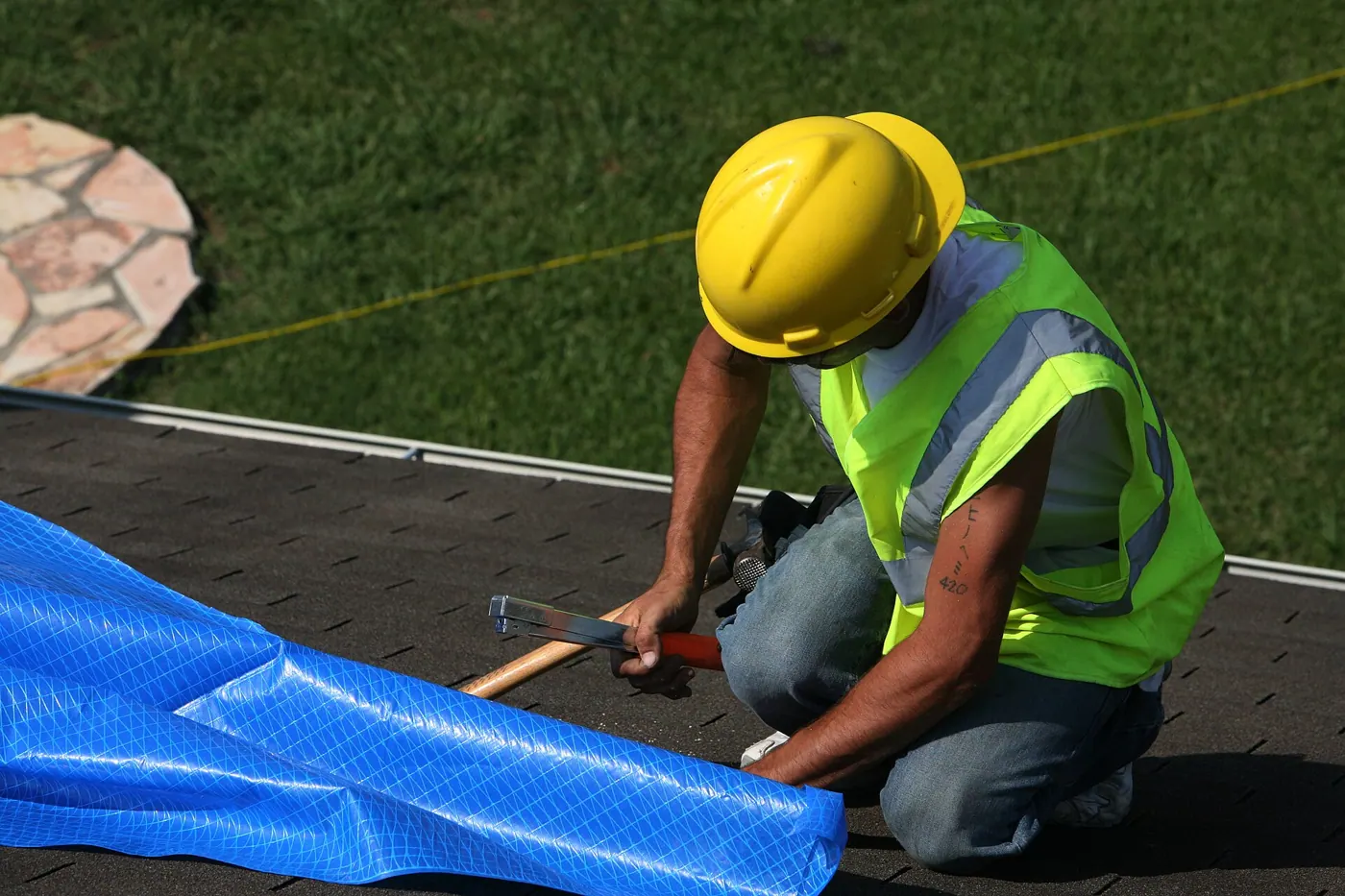
Emergency work is not the final fix. It is a fast step that stops water from spreading while a permanent repair is planned. Done well, it protects ceilings, insulation, wiring and floors in the hours and days after a storm or sudden failure.
This page explains what counts as a roof emergency, what to do before help arrives, how the pro stops the water, and how to document the damage. If you want the bigger picture, our roof repair Fort Lee home page shows how the service works from the first call.
What counts as an emergency roof repair?
A roof emergency is any problem where water is entering the building now, or where part of the roof could fail or fall. Active dripping, a ceiling that bulges, or a section of roof peeled back by wind all qualify. So does a tree limb or debris that has punched through the roof.
A slow stain that has not changed in weeks is usually urgent but not an emergency. It still needs attention, but you can schedule it with less rush. If you are not sure which one you have, call and describe what you see.
- Water dripping or running through a ceiling, light fixture or wall
- A bulging, sagging or cracked ceiling holding water
- Shingles, flashing or membrane torn off after wind
- A tree limb, debris or equipment that has damaged the roof
- Standing water on a flat roof that is leaking into units below
- Roof or ceiling damage near electrical fixtures or panels
What should I do right away while I wait for a roofer?
Your first job is safety, and your second is limiting damage inside. Do not climb onto a wet, icy or windy roof. Falls from roofs cause serious injuries, and a pro has the gear and training to work up there.
If you see a bulging ceiling, stay out from under it. If it is safe, poke a small hole in the lowest point of the bulge with a screwdriver so the water drains into a bucket instead of collapsing all at once. Stand to the side while you do it.
- Move furniture, rugs and electronics out of the wet area
- Place buckets or tubs under drips and lay towels around them
- Cover large items with plastic sheeting
- Turn off power to any room with water near lights, outlets or fans, if you can do it safely
- Take photos and video of the leak and the damage
- Move valuables and documents to a dry room
- Call the number on this page and describe where the water is entering
If you live in a condo or apartment building
Tell your property manager or condo board right away. In many Fort Lee buildings the roof is a common element, so the board or management company has to approve and often arrange the repair. A fast report helps get a roofer onto the roof sooner.
Also check the unit above you if there is one. The water you see may start several floors up and travel along pipes, beams and wall cavities before it shows itself.
Dealing with this in Fort Lee right now? Call and get connected with an independent local pro.
Get Help Now: (201) 298-8093How does the pro stop the water during an emergency visit?
The goal is to make the roof watertight for now, not to finish every repair in one visit. The technician you are connected with will first look at the roof and the interior to find where water is getting in. Then they choose the fastest safe way to close that spot.
Most emergency visits follow a similar order. Each step depends on weather, roof type and access.
- Check conditions and set up safe access to the roof
- Trace the leak from the ceiling stain back to the entry point
- Clear loose debris, standing water and torn material
- Apply a roof tarp, or patch with roof sealant and roof cement
- Secure tarps with strapping or boards so wind cannot lift them
- Seal flashing, vent pipe boots or small membrane splits when conditions allow
- Explain what was done and what the permanent repair will involve
Tarping a pitched shingle roof
On homes in areas like Coytesville, a tarp is often laid over the damaged section and extended past the ridge. It is then fastened firmly so wind cannot get underneath. A well-secured tarp can hold for days or weeks while materials are ordered.
If asphalt shingles are missing, the underlayment or roof decking underneath may be exposed. The pro will tell you if the sheathing looks wet or soft, since that affects the permanent repair.
Sealing a flat or low-slope roof
Many Fort Lee buildings have flat roofs with TPO membrane, EPDM rubber roofing, modified bitumen or a built-up roof. For these, a tarp is less common. The pro may instead patch a split, reseal a seam, or fix flashing at a parapet wall or HVAC curb using roof sealant or compatible patch material.
Clearing a clogged roof drain or scupper can also stop leaks fast, because ponding water forces its way through weak spots. You can read more about this on our flat roof repair page.
What causes sudden roof leaks in Fort Lee?
Sudden leaks in Fort Lee usually follow a weather event acting on a roof that was already worn. Nor'easters, summer thunderstorms and the remains of tropical storms push rain sideways into seams and edges. The cliff-top setting and tall buildings near the George Washington Bridge can funnel wind, which causes wind uplift on shingles, edge metal and rooftop equipment.
Winter adds another layer. Repeated freeze-thaw cycles open up flashing joints, sealant lines and membrane splits. Then the next heavy rain finds the gap. On pitched roofs, an ice dam can back water under shingles when attic insulation or attic ventilation is poor.
- Wind-lifted or missing asphalt shingles and architectural shingles
- Torn or lifted flat roof membrane edges
- Separated step flashing, counterflashing or chimney flashing
- Cracked vent pipe boots and failed sealant around penetrations
- Clogged gutters, downspouts, scuppers and roof drains
- Ponding water on a flat roof after heavy rain
- Impact damage from branches, debris or loose rooftop equipment
Is it safe to wait until morning?
If water is actively entering and you can keep it contained with buckets, you may be able to wait for a daylight visit. But water spreads fast. Wet insulation, drywall and framing can start to grow mold from roof leaks within a day or two in warm, humid weather.
Call right away if the ceiling is sagging, water is near electrical fixtures, or the opening is large. Even if the pro cannot come immediately, you will be in line and can get advice on what to do in the meantime. Response time depends on the weather, how many calls are coming in and the provider's availability.
How do I document damage for a homeowners insurance claim?
Document everything before you clean up, and keep every receipt. Insurers usually want proof of what happened, when it happened and what you did to limit further damage. Emergency tarping and water control costs are often part of that record, so ask the pro for a written description of the work.
Take wide and close-up photos of the ceiling, walls, floors and damaged belongings. If it is safe, photograph any visible roof damage from the ground. Write down the date and time of the storm and when you first noticed water.
- Photos and video of interior and exterior damage
- The date, time and weather conditions
- A list of damaged belongings
- Receipts for tarping, sealing and cleanup
- A written note from the pro describing the temporary repair
- A roof inspection report if one is done afterward
What about condos, co-ops and rentals?
The building's master policy may cover the roof, while your own policy may cover your belongings and interior finishes. Check with your condo board or property manager about who files what. Report the damage in writing so there is a clear record.
Tenants should notify the landlord promptly and keep copies of every message.
What happens after the emergency fix?
After the roof is made watertight, the next step is a proper assessment and a permanent repair. The pro can inspect the roof for hidden damage, such as wet decking, failed underlayment or damaged insulation. The scope may be small, like replacing a section of flashing, or larger if the roof is near the end of its life.
For many problems, a targeted repair is enough. Our roof leak repair page covers how leaks are traced and permanently sealed. If wind or hail caused the damage, see storm damage roof repair for the full process.
- Ask for a written scope and estimate before permanent work starts
- Ask whether permits are needed from the Fort Lee Building Department under the NJ Uniform Construction Code
- Dry out and inspect ceilings and insulation for moisture and mold
- Plan gutter, drain and flashing upkeep to prevent repeat leaks
How do I choose an independent roofer in an emergency?
We are a referral service, not a roofing contractor. We connect you with independent local providers, and you decide whether to hire the one who calls you. Even in a rush, take a minute to ask a few questions.
In New Jersey, contractors doing home improvement work generally need to be registered as home improvement contractors. Ask for the registration number and confirm it with the NJ Division of Consumer Affairs. Also ask about licensing, insurance, and a written agreement before any permanent work begins.
- Ask for their NJ Home Improvement Contractor registration and verify it
- Ask about liability insurance and workers' compensation
- Get the temporary and permanent work described in writing
- Ask how the tarp will be secured and how long it should last
- Be cautious of anyone who demands full payment up front or pressures you to sign immediately
Where do you help with emergency roof repair near Fort Lee?
Calls come from across the borough, from the high-rise towers along Palisade Avenue to older homes in Coytesville and apartment buildings near Main Street and Lemoine Avenue. Nearby towns include Edgewater, Cliffside Park, Palisades Park, Englewood Cliffs, Leonia, Ridgefield, Fairview, Teaneck, Englewood and Hackensack.
Tight streets, limited parking and rooftop access can slow a visit, especially in tall buildings. Tell the pro about access details when you call so they can bring the right equipment.
How can I prevent the next roof emergency?
Most emergencies start as small problems that were missed. A yearly roof inspection, plus a check after major storms, catches loose flashing, split seams and clogged drains before they fail. This matters most for older flat roofs and for pitched roofs that see ice dams.
Keep gutters, downspouts, scuppers and roof drains clear, trim branches that hang over the roof, and fix poor attic ventilation or attic insulation if ice dams are a problem. A roof inspection gives you a written view of the roof's condition so you can plan repairs on your schedule.
Frequently asked questions
How fast can someone get to my roof in Fort Lee?
It depends on the weather, how many people are calling and who is available. When you call the number on this page, tell the operator it is an active leak so it can be treated as urgent. Timing is not guaranteed.
Will a tarp fix my roof leak?
A tarp is a temporary cover that keeps water out until the permanent repair is done. It works best when it is secured properly over a damaged pitched roof. Flat roofs are often patched or sealed instead.
How long can a roof tarp stay on?
A well-secured tarp can last a few weeks, but wind, sun and snow can wear it down. Ask the pro how long to expect it to hold, and schedule the permanent repair as soon as you can.
Does homeowners insurance cover emergency roof repair?
Many policies cover sudden storm damage and reasonable steps to prevent further loss, but coverage varies. Photograph the damage, keep receipts and contact your insurer. Condo owners should also ask the board about the building's master policy.
Should I call my condo board or a roofer first?
Do both. Contain the water and call the number on this page, but also notify your property manager or condo board right away. They may need to approve the work or already have a preferred provider.
Can I go on the roof to cover the leak myself?
It is not recommended. Wet, icy or windy roofs are dangerous, and flat roofs can have hidden weak spots. Stay inside, contain the water and let a pro do the roof work.