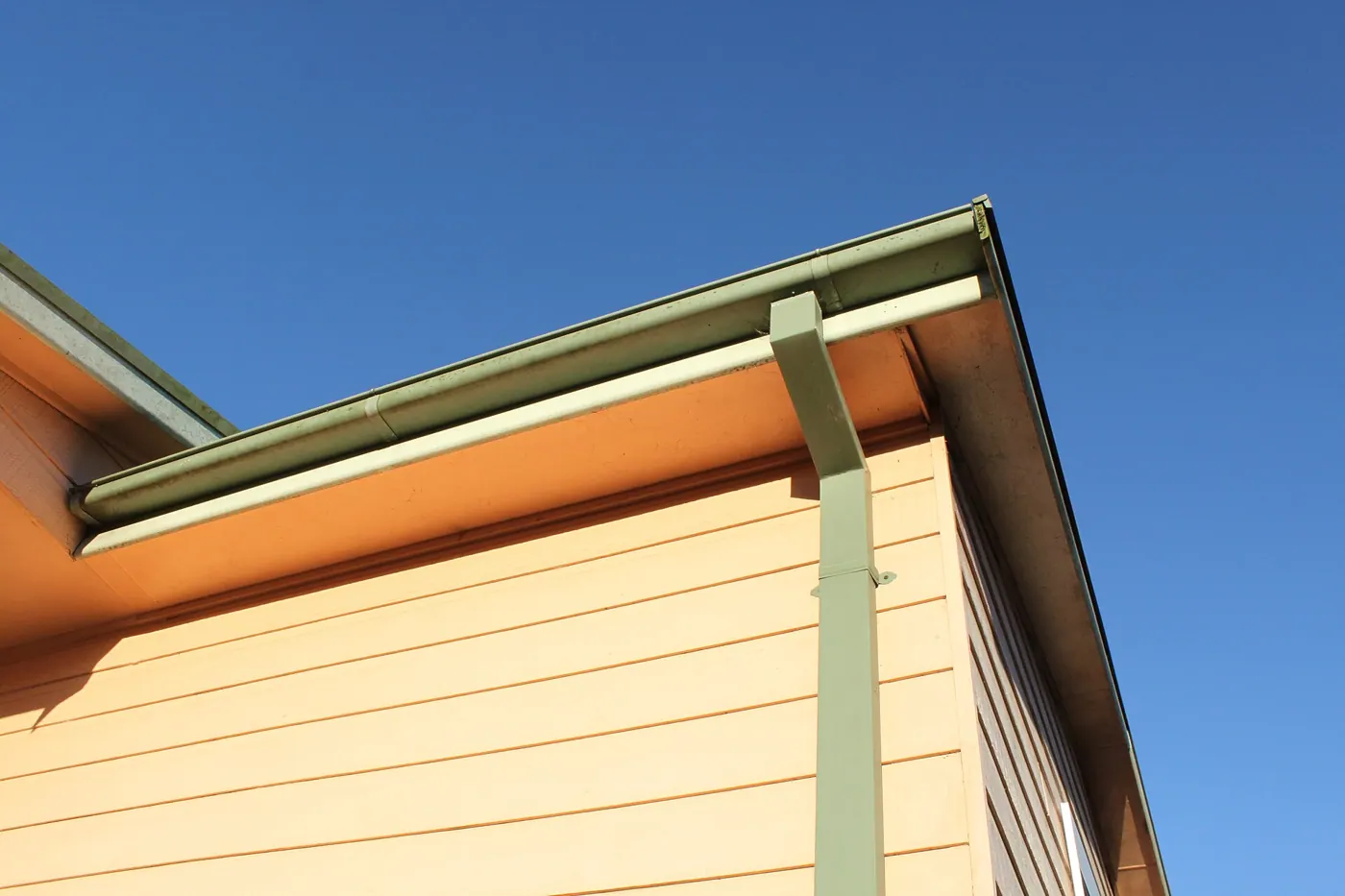
This page is for homeowners, small multi-family owners and building managers. Callers who need gutters and drainage work are connected through the same number as our roof leak callers. That matters because gutters and roofs fail together more often than people expect.
Below you will find the warning signs, local causes, what a pro does step by step, what affects timing, and how to tell when it is urgent. If you want the bigger picture on keeping water out, our local Fort Lee roof repair page is a good place to start.
What should you do first if your gutters are overflowing or leaking?
Stay safe and slow the water down. Do not climb a ladder in rain, wind or ice. A wet gutter edge is slippery, and ladders on sloped Fort Lee driveways and tight side yards can shift.
From the ground, look for the spot where water is escaping. Move belongings away from any wall or basement area that is getting wet. Place a bucket or direct a hose-free path away from the foundation if you can do it safely.
Then call the number on this page. Tell the pro what you see: overflow, a loose gutter, a downspout that dumps at the wall, or water inside. The more detail you give, the better the visit goes.
- Do not stand under a sagging gutter loaded with water or ice.
- Take photos from the ground for your records and any insurance talk.
- Note where water lands: a walkway, a neighbor's yard, a basement window well.
- If water is entering the building, ask about same-day help.
What are the signs that gutters or downspouts need repair?
The most common sign is water spilling over the front edge during a normal rain. That usually means a clog, a pitch problem or gutters that are too small for the roof area. Other signs show up in less obvious places.
Look at the whole drainage path, not just the trough. A gutter can look fine while the downspout underneath is packed with shingle grit and leaves.
- Gutters pulling away from the fascia or visibly sagging
- Rust spots, cracks or open seams that drip at the joints
- Water stains or peeling paint on siding, soffits or fascia
- Plants or small trees growing in the gutter
- Pooling water or soil erosion along the foundation
- Icicles or heavy ice buildup along the roof edge in winter
- Downspouts that detach, bend or empty right at the wall
- Ceiling water stain near an exterior wall, which can point to overflow reaching the roof edge
Dealing with this in Fort Lee right now? Call and get connected with an independent local pro.
Get Help Now: (201) 298-8093Why do gutters fail so often in Fort Lee?
Fort Lee has a four-season Northeast climate, and each season stresses gutters in a different way. Heavy summer thunderstorms and nor'easters can send more water than a clogged or undersized gutter can carry. Fall leaves and shingle grit then pack the troughs.
Winter is harder still. Repeated freeze-thaw cycles loosen fasteners and open seams. Ice can fill a gutter, add serious weight and pull it off the fascia. On pitched roofs with weak attic insulation or poor attic ventilation, ice dams can form and push meltwater back under the shingles.
Wind and the cliff-top setting
Wind funnels between tall buildings and along the Palisades edge. It can bend gutter sections, loosen hangers and rattle downspout straps. Over time the gutter shifts out of pitch and starts holding water instead of moving it.
Older homes in Coytesville and western Fort Lee
Many older single-family and two-family homes have aging aluminum or steel gutters, worn fascia boards and short downspouts. Wood trim behind the gutter can rot after years of overflow. The pro may need to fix the trim before new gutters can hang well.
Flat roofs, scuppers and roof drains
Mid-rise and garden-apartment buildings often drain through roof drains, scuppers and interior or exterior downspouts instead of classic gutters. When those clog, ponding water builds on the roof and can find any weak seam, parapet joint or flashing. If you manage a building like this, see our page on flat roof repair for how drainage and membranes work together.
How does a pro repair or replace gutters step by step?
A good visit starts with a look, not a quote. The pro checks the full drainage path from the roof edge to where the water lands. Then they decide whether a repair is enough or whether replacement makes more sense.
Here is the usual order of work. Details vary by building type and by what the inspection finds.
- Inspect the gutters, hangers, fascia, soffit, downspouts and the roof edge above.
- Clear debris from the gutters and downspouts, and flush them to test flow.
- Check the slope so water moves toward the downspout outlets.
- Re-hang or add hangers and brackets where sections sag.
- Seal leaking seams and end caps with gutter sealant, or replace failed sections.
- Replace damaged downspouts, elbows and straps as needed.
- Add extensions or splash blocks so water exits well away from the foundation.
- Repair or replace rotted fascia board if it cannot hold the gutter.
- Run water again and confirm there are no leaks, overflow points or backups.
When is gutter replacement better than repair?
Replacement makes sense when the gutters are cracked in many places, rusted through, bent beyond straightening or too small for the roof. Patching a worn system over and over rarely saves money or hassle in the long run.
Seamless gutters are a common option because they have fewer joints to leak. Material choices include aluminum, steel and copper. Ask the pro to explain the tradeoffs for your building, your budget and your exposure to wind and ice.
If the roof edge itself is damaged, it can be smart to look at both at once. Our roof replacement page explains when edge metal, drip edge and gutters are handled together.
What about gutter guards and drainage away from the foundation?
Gutter protection can cut down on clogs, but it does not remove the need for cleaning. Screens, mesh covers and reverse-curve guards each work differently. Fine shingle grit and pine needles can still build up on or under some types.
Where the water goes matters as much as the gutter. Downspouts that empty at the wall can soak the foundation, flood a basement or undermine a walkway. Extensions, buried drain lines and splash blocks can help move water away. On steep lots near the Palisades, runoff patterns and neighboring properties are worth considering.
Ask the pro to show you where water will travel after the work is done. That one question prevents many repeat problems.
How do gutter problems lead to roof leaks and interior damage?
Clogged gutters hold water against the roof edge. That water can back up under the first row of shingles, soak the roof decking (sheathing) and rot the fascia. In winter it feeds ice dams, which can push water through the roof into ceilings and walls.
Interior signs include a ceiling water stain, peeling paint, damp insulation and a musty smell. Mold from roof leaks can start in a day or two when materials stay wet. If you see these signs, it helps to have the roof checked too. Our page on roof leak repair covers how leaks are traced to their source.
How long does gutter repair take in Fort Lee?
Simple cleaning or a small re-hang often takes part of a day. Replacing gutters on a typical single-family home usually takes about a day, depending on length, height and the number of corners. Multi-story and multi-unit buildings take longer.
Several things change the timeline. Weather is the big one, since wind and rain make ladder work unsafe. Tight lots, street parking and limited access can slow staging. Rotted fascia, special materials or custom-length downspouts can add time.
- Building height and roof edge length
- Access for ladders, lifts or hoisting
- Condition of fascia, soffit and roof edge
- Material choice and lead time
- Board or management approval on condo and co-op properties
- Weather and wind on the day of work
What should condo boards, landlords and property managers know?
Work on multi-unit buildings usually needs board or management approval. Have the contact ready when you call, and ask the pro about written scopes, access plans and notice to residents.
Request a clear written description of the work and any photos taken. A roof inspection report can help a board decide between a targeted drainage repair and a bigger project. For larger changes, check with the Fort Lee Building Department about permits under the NJ Uniform Construction Code. Our roof inspection page explains what a report usually includes.
How do you choose a gutter pro and check credentials?
We are a referral service, not a contractor. The providers we connect you with are independent, and we cannot verify their credentials for you. Always confirm details directly before work starts.
In New Jersey, home improvement contractors generally must register with the NJ Division of Consumer Affairs. Ask for the registration number and look it up. Ask about liability insurance and workers' compensation, and get the scope, materials and timing in writing.
- Ask for a written scope that lists materials, downspout locations and cleanup.
- Ask how water will be directed away from the foundation.
- Ask what is covered if hidden rot is found behind the gutter.
- Ask whether permits or board approval are needed.
What can you do while you wait for help?
Keep people and pets away from loose or sagging gutters. From the ground, you can move downspout extensions, clear a splash path and protect basement windows. Move furniture and valuables away from any wet wall.
If a gutter has torn off and the roof edge is open, a temporary tarp may be needed. Our page on emergency roof repair and tarping explains how that works. If you plan to file a homeowners insurance claim after storm damage, take dated photos and keep receipts.
Frequently asked questions
How often should gutters be cleaned in Fort Lee?
Most properties need cleaning at least twice a year, usually late spring and late fall. Homes near trees may need more. Check after big storms, and before winter so ice does not lock debris in place.
Can a clogged gutter really cause a roof leak?
Yes. Backed-up water can get under shingles, soak the roof decking and rot the fascia. In winter, clogged gutters feed ice dams that push water into the attic and ceilings.
Are gutter guards worth it?
They can reduce clogs, especially under heavy tree cover, but none are maintenance-free. Ask the pro which style fits your roof and debris type, and plan on occasional checks.
Should I repair or replace my gutters?
Repair works for loose hangers, small leaks and clogs. Replacement is better when gutters are rusted, cracked in many places, bent or too small for the roof. A pro can look at the whole system and tell you which fits.
Where should downspouts drain?
Several feet away from the foundation, and away from walkways and neighboring property. Extensions, splash blocks or buried lines can help. Poor drainage can cause basement dampness and erosion.
Do apartment and condo buildings use gutters?
Some do, but many flat-roof buildings use roof drains, scuppers and downspouts. These still need regular clearing. Clogs there cause ponding water, which can lead to leaks inside units.