Flashing is the thin metal or membrane strip that keeps water out of the joints on your roof. Those joints are where most leaks start, because water naturally runs toward them. In Fort Lee, wind, freeze-thaw cycles and aging roofs wear flashing down faster than many owners expect.
While you wait, keep it simple. Put a bucket under the drip, move furniture and electronics away, and do not climb onto a wet roof. If you want the bigger picture on leaks, our page on roof leak repair explains how a pro traces water to its source.
What is roof flashing and why does it leak?
Roof flashing is a waterproof barrier installed wherever the roof meets something else, like a chimney, a wall, a pipe or a skylight. It directs water down and away from the seam. When it bends, lifts, rusts or loses its sealant, water gets underneath.
Flashing often fails quietly. The roof surface can look fine from the street while the joint beside the chimney lets in a little water every storm. Over time that water soaks the decking and insulation and shows up as a ceiling water stain.
Most flashing leaks come from a few common causes:
- Sealant or roof cement that dried out, cracked or pulled away
- Metal that rusted, bent or lifted in high wind
- Nails that backed out and opened small gaps
- Poor overlap or missing pieces from an earlier repair
- Movement between a wall and the roof as the building expands and contracts
Which parts of a roof need flashing in Fort Lee?
Flashing shows up in different forms depending on the roof. Fort Lee has both tall buildings with flat roofs and older homes with pitched shingle roofs, so the problem spots vary.
Knowing the type helps you describe the leak when you call.
Chimney flashing and counterflashing
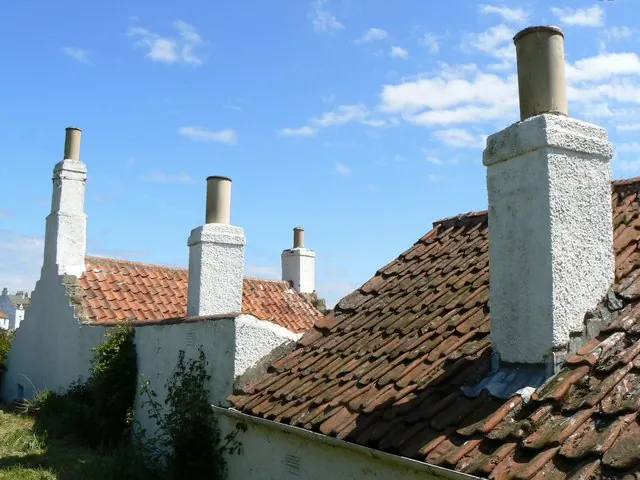
Chimney flashing is a two-part system. Base or step flashing sits against the roof, and counterflashing is tucked into the masonry above it. Mortar joints crack, the counterflashing loosens, and water runs behind it. This is common on older homes in Coytesville, where our Coytesville roof help page covers other typical issues.
Step flashing along walls and dormers
Step flashing is a series of small bent metal pieces woven in with shingles where a roof meets a side wall. If one piece shifts or siding is not sealed above it, water can slip behind. Leaks often appear at the top corner of a room.
Parapet wall and wall flashing on flat roofs
A parapet wall is the short wall around the edge of many flat roofs. The membrane runs up the wall and is covered by counterflashing or coping. When that edge detail splits or pulls loose, water drops straight into the wall cavity and upper-floor units.
Vent pipe boots, HVAC curbs and skylights
Every roof penetration is a possible leak. Vent pipe boots use a rubber collar that cracks with age and sun. HVAC curbs, exhaust fans and skylights each have their own flashing kit. Skylight leaks are covered more in skylight repair and installation.
Dealing with this in Fort Lee right now? Call and get connected with an independent local pro.
Get Help Now: (201) 298-8093What are the signs of a flashing leak?
The most common sign is a water stain on a ceiling or wall near a chimney, exterior wall, vent or skylight. Stains that grow after rain or wind-driven storms point to a joint problem rather than a hole in the middle of the roof.
Other signs can be seen from the ground or inside the building:
- Rust streaks or gaps in metal at the chimney or wall
- Dark, peeling or bubbled paint near a window or roofline
- Cracked, dried-out caulk or roof cement
- Lifted or missing shingle edges near flashing
- A musty smell in the attic or top-floor closet
- Visible mold from roof leaks on ceilings or in corners
Why does flashing fail so often in Fort Lee?
Fort Lee gets four real seasons. Water seeps into tiny gaps, freezes, expands and widens the gap. That freeze-thaw cycle is hard on sealant joints, seams and metal edges, and it repeats all winter.
Wind is another factor. The cliff-top setting and tall towers can funnel strong gusts, and nor'easters push rain sideways into joints that handle straight-down rain just fine. Wind uplift can lift edge metal and loosen rooftop equipment.
Age matters too. Many local buildings have older flat or low-slope roofs with parapets, drains and rooftop mechanicals. Each of those is a place where a small flashing leak can spread into ceilings and units below.
How does a pro repair roof flashing, step by step?
The technician you are connected with will usually start by finding where the water really enters. That can mean checking the attic, the stained ceiling and the roof itself. Water can travel along framing before it drips, so the stain is not always right under the leak.
Once the source is found, the work typically follows this order:
- Inspect the flashing, nearby roofing, sealant and fasteners
- Remove loose sealant, old roof cement and damaged pieces
- Dry and clean the area so new material bonds well
- Reseal, reset or replace flashing and counterflashing as needed
- Repair nearby shingles, membrane or underlayment if they are damaged
- Check drains, gutters and scuppers that may be sending water to the joint
- Test the repair and explain what was done
Should flashing be resealed or replaced?
Resealing is a good fit when the metal is sound and only the sealant has dried or cracked. It is usually the quicker, smaller job. On its own it is a short-term fix when the metal underneath is worn out.
Replacement makes more sense when flashing is rusted through, bent, missing, or was installed with poor overlaps. On a chimney, that often means new base flashing and new counterflashing set into the mortar joint. On a flat roof, it may mean a new parapet flashing or a patch of fresh membrane such as TPO membrane, EPDM rubber roofing or modified bitumen.
Ask the pro to explain why they recommend one or the other. If the surrounding roof is near the end of its life, a candid conversation about roof replacement may also be fair.
What affects the scope of a flashing job?
Flashing repairs vary a lot. A single pipe boot is quick. A full chimney or long parapet run takes more time and materials. We do not quote prices, and the independent provider will give you an estimate after seeing the roof.
These factors usually shape the job:
- Type of roof: asphalt shingles, architectural shingles, or a flat system like built-up roof (BUR)
- How much flashing is damaged and how easy it is to reach
- Hidden damage to underlayment, roof decking (sheathing) or insulation
- Height, access and staging on mid- and high-rise buildings
- Weather and whether a temporary roof tarp is needed first
- Approvals from a condo board or property manager
How long does flashing repair take in Fort Lee?
Small repairs, like replacing a vent pipe boot or resealing a short run, are often finished in a single visit. Chimney work and parapet work can take longer, especially if masonry needs attention or the weather is bad.
Dry conditions matter. Sealants and membranes bond poorly on wet or very cold surfaces, so a pro may place a temporary tarp or patch first and come back for the permanent fix. If you need that first step now, see emergency roof repair and tarping.
When is a flashing leak an emergency?
Treat it as urgent if water is actively coming in, a ceiling is bulging or sagging, or water is near light fixtures or outlets. Stay out of the room if a ceiling looks heavy with water, and keep people and pets away.
Also call quickly after a storm if flashing, shingles or edge metal were torn loose. Open flashing lets in more water with every rain. Never go onto a wet, icy or steep roof yourself.
If the damage came from a big storm, take photos and review your homeowners insurance claim options. See storm damage roof repair for what to document.
What can you do while waiting for the pro?
Start with safety and containment. Small steps now can limit the damage inside.
Here is a simple checklist:
- Place a bucket or tub under the drip and lay towels around it
- Move furniture, rugs and electronics out of the wet area
- Poke a tiny hole in a bulging ceiling only if it is safe, to drain water into a bucket
- Turn off power to the area if water is near lights or outlets
- Take dated photos and video of the damage
- Notify your condo board or property manager if you live in a multi-unit building
Do condo boards and managers need to be involved?
Usually, yes. In a condo, co-op or rental building, the roof is a shared element, so repairs normally need board or management approval. Tell them early and share photos of the stain and its location.
Many Palisade Avenue and Hudson Terrace buildings follow set processes for roof access and vendor approval. Our Palisade Avenue corridor page explains how this often plays out. Larger repairs or structural work may involve the Fort Lee Building Department and the NJ Uniform Construction Code, so ask the provider what applies.
How can you prevent flashing leaks?
A yearly look and a check after major storms catch most small problems early. A roof inspection report gives you written findings you can share with a board, insurer or buyer. Learn more about roof inspections.
Keep drains, scuppers, gutters and downspouts clear so ponding water does not sit against flashing. Trim branches that scrape the roof. On pitched roofs, good attic ventilation and attic insulation reduce ice dams that push water under flashing and shingles.
Where the membrane is aging but still sound, a roof coating or fresh roof sealant at details can extend its life. Ask the pro whether it fits your roof.
How should you choose a provider for flashing work?
We connect you with independent local providers; we are not a contractor and cannot verify any provider's credentials. Ask each one directly about their license and insurance, and confirm that they hold a valid New Jersey Home Improvement Contractor registration for residential work. The NJ Division of Consumer Affairs lets you check registration.
Ask for a written scope that names the flashing being repaired or replaced, the materials, and the warranty terms. A good pro will explain what caused the leak and show you photos of the problem.
Where do you help with flashing repair near Fort Lee?
Requests come from across Fort Lee, including Downtown near Main Street, Linwood, Coytesville and the towers along Palisade Avenue. Neighboring towns such as Edgewater, Cliffside Park, Englewood Cliffs, Leonia and Teaneck are also covered, depending on provider availability.
For general help, visit our roof repair near Fort Lee, NJ home page, or for flat roof issues see flat roof repair.
Frequently asked questions
Can I fix roof flashing myself with caulk?
A dab of sealant can slow a drip for a short time, but it often hides the real problem. Working on a roof is also risky, especially when wet. It is safer to call a pro and use a bucket and tarp inside until help arrives.
Why does my chimney leak only when it rains hard?
Wind-driven rain pushes water sideways into small gaps in chimney flashing, counterflashing or mortar. Light rain may not reach those gaps. A nor'easter or heavy thunderstorm often exposes them.
Is a flashing leak covered by homeowners insurance?
It depends on the policy and the cause. Sudden storm damage may be covered, while wear and tear usually is not. Take photos, review your policy and ask your insurer before repairs, unless you need emergency steps to prevent more damage.
How do I know if the leak is flashing or the shingles?
Leaks that show up next to a chimney, wall, vent or skylight usually point to flashing. Leaks in open areas of the roof more often come from shingles or membrane. A pro can confirm by inspecting the roof and attic.
Does flashing on a flat roof or parapet work the same way?
The idea is the same, but the materials differ. Flat roofs use membrane turned up the wall and covered by counterflashing or coping. Failed seams and clogged drains nearby often add to the problem.
How often should flashing be checked?
Once a year and after major storms is a good habit. Older roofs, roofs near big trees, and roofs with chimneys or many penetrations may need closer attention.